

The Ultimate Miami Travel Guide for First-Time Visitors
Miami has a way of making a first visit feel like a vacation from the moment you arrive. Palm trees, beautiful beaches, colorful neighborhoods, warm weather, ocean views, vibrant nightlife, incredible food, and a relaxed atmosphere all come together to create a city with its own unique personality.
But for a first-time visitor, Miami can also feel a little overwhelming. Beaches to explore, neighborhoods to discover, restaurants to try, museums to visit, and outdoor experiences to fit into your trip.
Trying to do everything at once can quickly turn a relaxing vacation into a busy schedule.
The better approach is to plan around the experiences that interest you most.
This Miami travel guide for first-time visitors will help you understand the city, decide when to visit, choose where to stay, get around, discover the best experiences, and create an itinerary that balances beaches, culture, food, neighborhoods, and relaxation.
Why Visit Miami?
Miami is more than just a beach destination.
Its appeal comes from the combination of tropical scenery, urban energy, cultural diversity, entertainment, architecture, food, and outdoor activities.
You can spend your morning relaxing on South Beach, enjoy Cuban food for lunch, explore colorful streets in Little Havana during the afternoon, and watch the sunset over Biscayne Bay in the evening.
The city also provides easy access to different types of experiences.
You can enjoy:
- Beautiful beaches
- Art and culture
- International food
- Historic neighborhoods
- Shopping
- Nightlife
- Outdoor activities
- Waterfront views
- Architecture
- Day trips
One of Miami’s biggest attractions is its diversity.
Different neighborhoods have their own character, and exploring beyond the beach can give you a much better understanding of the city.
When Is the Best Time to Visit Miami?
Miami can be visited throughout the year, but the experience can change significantly depending on the season.
Winter
Winter is one of the most popular periods to visit Miami.
The weather is generally warm and comfortable compared with many other parts of the United States, making it attractive for beach days, outdoor sightseeing, and exploring neighborhoods.
The downside is that popular areas can become busy, and accommodation prices may be higher.
If you are planning a winter trip, booking important parts of your vacation ahead of time can be helpful.
Spring
Spring can be an excellent time to explore Miami.
The weather is generally suitable for outdoor activities, and you can combine beach time with sightseeing, restaurants, shopping, and neighborhood exploration.
It is a good choice for travelers who want a mixture of relaxation and activities.
Summer
Summer brings hot and humid weather, along with the possibility of frequent rain and thunderstorms.
However, it can still be an enjoyable time to visit if you are comfortable with the heat.
Plan outdoor activities earlier in the day and keep some indoor options available in case of bad weather.
Fall
Fall can offer a quieter atmosphere compared with some of the busier travel periods.
The weather remains warm, although tropical weather can affect travel plans.
If you visit during this period, keep your itinerary flexible and check the weather forecast before planning outdoor activities.
How Many Days Do You Need in Miami?
For a first visit, five days is a great starting point.
A shorter trip can cover the major highlights, but having several days allows you to enjoy the beach without rushing through everything else.
With five days, you can combine:
- South Beach
- Miami Beach
- Little Havana
- Downtown Miami
- Wynwood
- Coconut Grove
- Museums
- Shopping
- Food experiences
- Waterfront activities
- A possible day trip
If you have seven days or more, you can slow down and explore additional neighborhoods and nearby destinations.
You don’t need to see everything.
Miami is better enjoyed when you leave enough time to relax.
After all, spending an afternoon on the beach or sitting at a café can be just as memorable as checking another attraction off your list.
How to Get Around Miami
Getting around Miami depends heavily on where you are staying and what you want to see.
Some areas are easy to explore on foot, while others are more spread out.
Use Public Transportation
Miami has public transportation options that can be useful for getting between different parts of the city.
The Metrorail and Metromover can be particularly useful around Downtown Miami and nearby areas.
Public transportation can help you avoid parking costs and traffic when traveling between suitable destinations.
However, it may not always be the most convenient option for every attraction.
Walk Around the Neighborhoods
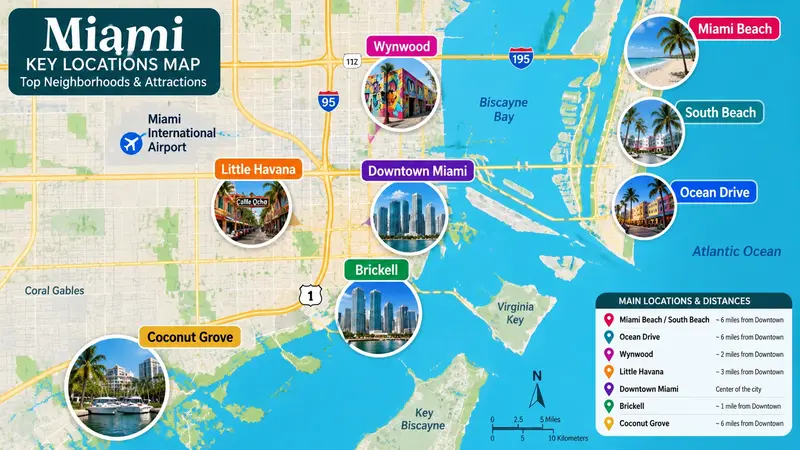
Walking is one of the best ways to experience areas such as South Beach, Ocean Drive, Little Havana, and Wynwood.
You can notice colorful buildings, cafés, restaurants, street art, shops, and local businesses that you might miss while traveling by car.
Wear comfortable shoes and carry water, especially during warmer months.
Taxis and Rideshares
Taxis and rideshare services can be useful when traveling between neighborhoods or when public transportation isn’t convenient.
They can also be helpful if you’re traveling with luggage, visiting several destinations in one day, or returning to your hotel after an evening out.
Keep in mind that traffic can make journeys take longer than expected.
Renting a Car
A rental car can be useful if you plan to explore areas outside central Miami or take day trips.
However, you don’t necessarily need one for a trip focused on Miami Beach and nearby neighborhoods.
Consider your itinerary before deciding whether the additional cost of parking, fuel, and rental fees is worthwhile.
Where Should First-Time Visitors Stay?
Choosing the right area can have a major impact on your Miami trip.
You don’t necessarily need to stay directly on the beach.
The best location depends on whether your priorities are beaches, nightlife, food, culture, shopping, or a quieter neighborhood atmosphere.
South Beach
South Beach is one of the most recognizable parts of Miami.
It is a popular choice for first-time visitors who want easy access to beaches, restaurants, nightlife, Art Deco architecture, and Ocean Drive.
The area can be lively and busy, especially during popular travel periods.
Mid-Beach
Mid-Beach offers access to the coastline while providing a somewhat different atmosphere from the busiest parts of South Beach.
It can be a good option for travelers who want beach access but prefer to stay away from some of the constant activity around Ocean Drive.
Downtown Miami
Downtown is useful for travelers interested in the city’s urban side.
You’ll have access to museums, waterfront areas, restaurants, shopping, and transportation connections.
It can also be convenient if your plans include exploring different parts of the Miami area.
Brickell
Brickell is known for its modern buildings, restaurants, hotels, shopping, and energetic city atmosphere.
It can appeal to travelers who prefer an urban environment rather than staying directly beside the beach.
Coconut Grove
Coconut Grove offers a more relaxed atmosphere with greenery, restaurants, waterfront areas, and a neighborhood feel.
It’s worth considering if you want something different from the busy beach districts.
10 Miami Experiences First-Time Visitors Should Consider
You don’t need to follow a huge checklist to enjoy Miami.
However, these experiences can give first-time visitors a good introduction to the city.
1. Spend Time on South Beach
South Beach is one of Miami’s signature experiences.
The wide sandy beach, warm water, palm trees, and surrounding city atmosphere make it an obvious starting point for many first-time visitors.
You can spend a few hours swimming, relaxing, walking along the beach, or simply enjoying the scenery.
Don’t feel like you need to spend the entire day there.
A few relaxed hours can be enough before exploring the surrounding neighborhood.
2. Walk Along Ocean Drive
Ocean Drive is one of Miami Beach’s most recognizable streets.
The colorful Art Deco buildings, restaurants, palm trees, and lively atmosphere make it an interesting place to walk.
The area is especially atmospheric in the evening when the street becomes more active.
Take your time rather than simply passing through.
Look at the architecture and explore some of the surrounding streets as well.
3. Explore Little Havana
Little Havana gives you a completely different experience from Miami Beach.
The neighborhood is strongly associated with Cuban culture and offers restaurants, cafés, music, art, shops, and a lively street atmosphere.
Walk along Calle Ocho, stop for Cuban food or coffee, and spend some time taking in the neighborhood rather than rushing from one attraction to another.
Food is an important part of the experience here.
4. Discover Wynwood
Wynwood is well known for its colorful street art and creative atmosphere.
The neighborhood is a great place for travelers interested in murals, galleries, restaurants, cafés, and contemporary culture.
Give yourself enough time to walk around.
Some of the best discoveries can happen when you move beyond the most photographed walls and explore nearby streets.
5. Visit the Art Deco Historic District
Miami Beach’s Art Deco architecture is one of the city’s defining visual features.
The historic district contains numerous buildings with distinctive shapes, colors, and architectural details.
You can explore the area independently or join a guided experience if you want to learn more about its history and design.
It works especially well when combined with Ocean Drive and South Beach.
6. Explore Bayside and the Waterfront
Miami’s relationship with the water is an important part of its identity.
Spend some time around the waterfront, enjoy the views, browse shops, have a meal, or simply watch the boats moving across the bay.
The area can also serve as a starting point for some sightseeing and boat experiences.
7. Enjoy Miami’s Food Scene
Food should be an important part of your Miami trip.
The city’s international population has created an incredibly diverse dining scene.
Try Cuban dishes, seafood, Latin American food, Caribbean flavors, and other international cuisines.
Don’t limit yourself to restaurants in tourist-heavy areas.
Exploring neighborhood restaurants can introduce you to a different side of Miami.
8. Visit a Museum or Cultural Attraction
Miami isn’t only about beaches and nightlife.
The city has museums, galleries, gardens, historic properties, and cultural attractions that can add variety to your trip.
Choose attractions based on your interests rather than trying to visit too many in one day.
A museum can also be a useful option when the weather isn’t suitable for outdoor activities.
9. Watch the Sunset
Miami’s waterfront setting makes sunset an experience worth making time for.
Find a comfortable location near the beach or bay and slow down for a while.
You don’t necessarily need a special attraction.
Sometimes simply watching the sky change colors over the water can become one of the most memorable parts of your trip.
10. Take a Boat or Waterfront Tour
Seeing Miami from the water provides a different perspective of the city.
Depending on the experience you choose, you may see the skyline, waterfront neighborhoods, islands, and coastal scenery.
A boat experience can be especially enjoyable when you want a break from walking and sightseeing.
Don’t Spend Your Entire Trip on South Beach
South Beach is one of Miami’s biggest attractions, but it isn’t the whole city.
If you spend your entire vacation around the beach, you’ll miss many of the cultural and neighborhood experiences that make Miami interesting.
Consider exploring:
Little Havana
Experience Cuban culture, food, music, cafés, and the atmosphere around Calle Ocho.
Wynwood
Explore colorful murals, creative spaces, restaurants, and independent businesses.
Brickell
Discover Miami’s modern urban side with skyscrapers, restaurants, shops, and waterfront views.
Coconut Grove
Slow down and explore one of Miami’s greener and more relaxed neighborhoods.
Downtown Miami
Visit museums, waterfront areas, restaurants, and other attractions around the city’s urban core.
You don’t need to visit every neighborhood during your first trip.
Even spending a day away from the beach can give you a much more complete impression of Miami.
How to Plan Your Days
One of the biggest mistakes you can make in Miami is trying to fit too many destinations into a single day.
Instead, group places that are relatively close together.
For example, you could combine:
South Beach + Ocean Drive + Art Deco District
on one day.
Another day could include:
Little Havana + Brickell + Downtown Miami
This approach reduces unnecessary travel and gives you more time to enjoy each place.
Also leave some free time.
You may discover a restaurant you want to try, find an interesting shop, spend longer at the beach, or simply decide that you don’t want to rush to your next destination.
Those slower moments are often part of the best travel experiences.
How to Save Money in Miami
Miami can become expensive, particularly when you combine hotels, restaurants, entertainment, transportation, and beach activities.
However, you don’t need an unlimited budget to enjoy the city.
You can reduce daily expenses by:
- Choosing accommodation outside the most expensive areas
- Using public transportation when practical
- Spending time at public beaches
- Mixing restaurants with affordable local food
- Walking between nearby attractions
- Choosing only the attractions you genuinely want to visit
- Looking for free cultural activities
- Avoiding unnecessary rideshare trips
- Planning popular activities ahead of time
One of the best things about Miami is that you can enjoy many experiences without spending a lot.
A beach walk, neighborhood exploration, sunset, or afternoon in a public park can cost little or nothing.
What Should You Book Before Your Trip?
You don’t need to reserve every part of your Miami vacation.
However, some experiences are easier when planned.
Consider booking ahead for:
- Popular hotels
- Boat tours
- Guided tours
- Special events
- Popular restaurants
- Museum exhibitions
- Water activities
- Rental cars for day trips
Try to maintain a balance between planned activities and free time.
A good Miami vacation should leave room for both.
Miami Travel Tips for First-Time Visitors
Bring Sun Protection
Miami’s sunshine can be strong, particularly when you’re spending several hours outdoors.
Bring sunscreen, sunglasses, and a hat, and stay hydrated.
Wear Comfortable Clothes
Miami is generally casual, especially around the beach.
Light and comfortable clothing can make long sightseeing days much easier.
Wear Comfortable Shoes
You’ll probably walk more than you expect.
Comfortable shoes are especially useful when exploring South Beach, Wynwood, Little Havana, and other neighborhoods.
Keep Your Schedule Flexible
Weather can affect outdoor plans.
Don’t make every hour of your vacation dependent on one activity.
Keep alternative indoor activities available.
Check Transportation Times
Miami traffic can be unpredictable.
A destination that looks close on a map may take considerably longer during busy periods.
Give yourself extra time when traveling to reservations or scheduled activities.
Keep Your Belongings Secure
As with any major tourist destination, keep an eye on your belongings in crowded areas and while using public transportation.
Don’t Stay Only in Tourist Areas
Miami has much more to offer than its most famous beach.
Explore neighborhoods, try local food, and spend time discovering the city’s cultural side.
A Simple 5-Day Miami Framework
If you want a starting point for planning your first trip, consider this structure.
Day 1: South Beach and Ocean Drive
Spend the day exploring South Beach, walking along Ocean Drive, seeing the Art Deco buildings, and relaxing on the beach.
Day 2: Little Havana and Downtown Miami
Explore Little Havana in the morning and afternoon before continuing toward Downtown Miami and the waterfront.
Day 3: Wynwood and Brickell
Spend time exploring Wynwood’s murals, restaurants, and creative atmosphere before discovering the modern side of Miami around Brickell.
Day 4: Beach and Waterfront Day
Keep the schedule relaxed.
Enjoy the beach, explore waterfront areas, take a boat tour, or simply spend the day enjoying Miami at a slower pace.
Day 5: Coconut Grove and Flexible Exploration
Explore Coconut Grove and use the rest of the day for anything you missed earlier in your trip.
You could return to the beach, visit a museum, try another restaurant, shop, or simply enjoy one final Miami sunset.
This is only a framework.
Your ideal schedule will depend on your interests, budget, travel companions, and the time of year.
Frequently Asked Questions
Is Miami good for first-time visitors?
Yes. Miami offers a mixture of beaches, food, culture, neighborhoods, shopping, outdoor activities, architecture, and entertainment, making it suitable for many different types of travelers.
How many days should I spend in Miami?
Five days is a good starting point for a first visit. It gives you enough time to experience the major highlights while still leaving room for relaxation and neighborhood exploration.
Do I need to rent a car in Miami?
Not necessarily. If you are mainly exploring Miami Beach and nearby areas, you can use walking, public transportation, taxis, and rideshare services. A rental car can become more useful if you plan to explore destinations outside the central Miami area.
What is the best area to stay in Miami?
There isn’t one answer for everyone. South Beach is convenient for beaches and nightlife, Brickell is suitable for a modern urban atmosphere, Downtown is useful for city attractions, and Coconut Grove offers a more relaxed neighborhood experience.
What should I see first in Miami?
For a first trip, consider combining South Beach, Ocean Drive, the Art Deco District, Little Havana, Wynwood, and a waterfront experience.
Is Miami expensive?
It can be, especially when it comes to hotels, dining, entertainment, and transportation. However, public beaches, neighborhood exploration, walking, affordable local food, and careful accommodation choices can help control your budget.
What is Miami known for?
Miami is widely associated with its beaches, warm climate, Art Deco architecture, Cuban and Latin American influences, nightlife, food, waterfront scenery, and diverse neighborhoods.
Final Thoughts
Your first Miami trip shouldn’t be about trying to see absolutely everything.
Instead, focus on experiencing the city.
Spend time on the beach. Walk through colorful neighborhoods. Try food you’ve never tasted. Explore Little Havana. Admire the Art Deco architecture. Discover Wynwood. Watch the sunset over the water. And leave some space in your itinerary for something you didn’t plan.
Miami becomes much more interesting when you move beyond the obvious attractions.
The beach may be what first brings you to the city, but the food, culture, neighborhoods, architecture, and relaxed moments can be what make you want to come back.
You don’t need to experience all of Miami in one visit.
Your first trip should give you a taste of what makes the city special while leaving plenty of reasons to return.